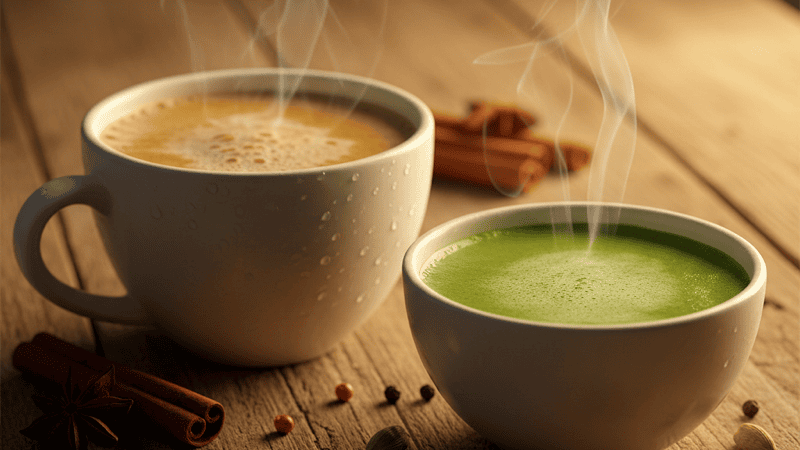
Chai vs Matcha: The Quick Comparison
Here is the side-by-side breakdown if you want the answer fast:
| Category | Masala Chai | Matcha |
|---|---|---|
| Caffeine | 40-70 mg/cup | 60-80 mg/cup |
| Energy feel | Quick, warming lift (2-3 hrs) | Calm, sustained focus (4-6 hrs) |
| Taste | Bold, warm, spiced | Earthy, vegetal, umami |
| Prep time | 10-15 min (stovetop) | 2-3 min (whisk) |
| Cost per cup | $0.30-0.50 | $1.00-2.00+ |
| Health edge | Anti-inflammatory spices | Antioxidants (EGCG) |
| Best time | Afternoon / evening | Morning / pre-workout |
Quick verdict: Choose chai for bold flavor, anti-inflammatory benefits, and affordability. Choose matcha for sustained energy, maximum antioxidants, and calm focus. Or do what serious tea drinkers do — matcha in the morning, chai in the afternoon.
Now let me break this down properly. This is a detailed chai vs matcha comparison covering caffeine, flavor, health benefits, cost, and brewing methods. By the end, you will know exactly which drink fits your life — or why you might want both.
Where They Come From
Masala chai traces its origins to India, where chaiwallahs (street tea vendors) have been simmering black tea with milk, sugar, and whole spices for generations. Every family has its own ratio of cardamom, ginger, cinnamon, and cloves — the recipe is personal, passed down through conversation rather than cookbooks. Our complete brewing guide covers the fundamentals.
Matcha arrived in Japan via China in the 12th century, when Zen Buddhist monks adopted powdered green tea to sustain concentration during meditation. The tea plants are shade-grown for three weeks before harvest, which boosts chlorophyll and L-theanine. The leaves are stone-ground into a fine emerald powder and whisked with hot water in a deliberate, meditative ritual. Two completely different tea traditions — one chaotic and bold, the other quiet and precise.
Flavor: Bold Warmth vs. Earthy Calm
Taste is where these two drinks diverge the most, and it is usually the deciding factor for people who try both.
What Chai Tastes Like
Chai is warm, bold, and layered. The spice blend delivers a wave of heat from ginger and black pepper, sweetness from cinnamon and cardamom, and depth from the malty Assam black tea base. Milk rounds everything into something rich and comforting — think of it as a hug in a mug, except that phrase makes me cringe, so let me just say it is deeply satisfying.
The flavor also shifts depending on who makes it. Heavy on ginger? You get a punchy, almost medicinal chai. More cardamom? It turns floral and aromatic. That variability is part of the appeal.
What Matcha Tastes Like
Matcha is vegetal, earthy, and slightly bitter with a creamy umami finish. Good ceremonial-grade matcha has a natural sweetness and almost no bitterness. Lower grades can taste grassy or astringent, which is why quality matters more with matcha than with almost any other tea.
Most people in the West drink matcha as a latte with oat or almond milk, which smooths out the earthiness. Traditionally, though, matcha is whisked into hot water with nothing added. That pure preparation is where you really taste the tea — and it is an acquired taste for a lot of people.
Caffeine Content: Chai vs Matcha
Both drinks deliver a moderate caffeine hit, but the experience of that caffeine is noticeably different. This is one of the most common reasons people pick one over the other.
| Factor | Chai (8 oz) | Matcha (8 oz) |
|---|---|---|
| Caffeine | 40-70 mg | 60-80 mg |
| L-theanine | Trace amounts | 15-40 mg |
| Energy feel | Quick, warming lift | Calm, sustained focus |
| Duration | 2-3 hours | 4-6 hours |
Why Matcha Feels Different
Matcha’s high L-theanine content is the key differentiator. L-theanine is an amino acid that promotes alpha brain wave activity — the same state associated with calm focus and meditation. It slows the absorption of caffeine, producing a steady four-to-six-hour alertness without the jitters or the crash that coffee drinkers know too well.
If you have ever felt wired and anxious after coffee, matcha’s caffeine delivery will feel like a revelation.
How Chai’s Caffeine Works
Chai’s caffeine comes from its Assam black tea base and hits a bit faster — you feel the warmth and energy within about fifteen minutes. The spices, especially ginger, can smooth the ride somewhat, but chai does not have matcha’s built-in L-theanine buffer. On the flip side, chai’s lower caffeine ceiling (40-70 mg per cup) means you can drink it in the afternoon without wrecking your sleep.
Health Benefits Compared
Both drinks deliver real, research-backed health benefits. But they work through entirely different mechanisms, which means the “healthier” choice depends on what your body actually needs.
Chai Health Benefits
- Anti-inflammatory spices. Ginger and cinnamon are potent anti-inflammatory agents. Multiple meta-analyses have found that daily ginger supplementation significantly lowers C-reactive protein levels — a key inflammation marker — with average reductions around 0.8 mg/L.
- Digestive support. Cardamom and ginger stimulate digestive enzyme production, making chai a natural after-meal drink. This is not folk wisdom — the mechanism is well-documented in gastroenterology research.
- Blood sugar regulation. Multiple clinical trials have shown that cinnamon improves insulin sensitivity, making chai a surprisingly smart choice for people monitoring their glucose levels.
- Respiratory benefits. The combination of ginger, black pepper, and cloves has traditionally been used to ease congestion and soothe sore throats. There is a reason chai consumption spikes during cold and flu season.
Matcha Health Benefits
- Antioxidant powerhouse. Matcha contains significantly more EGCG (epigallocatechin gallate) than standard brewed green tea — roughly three or more times the amount — because you are consuming the entire ground leaf rather than a steeped extract.
- Metabolism support. EGCG has been linked to increased fat oxidation during moderate exercise in several controlled studies. The effect is modest but real.
- Cognitive enhancement. The L-theanine and caffeine combination enhances attention, reaction time, and working memory. This synergy is why matcha has become a favorite among programmers and students.
- Cardiovascular health. Regular green tea consumption is associated with lower LDL cholesterol and reduced risk of heart disease in large population studies.
Both drinks are rich in polyphenols and offer cardiovascular benefits when consumed without excessive sugar. Neither is a miracle cure, but both are genuinely good for you.
Brewing: Slow Simmer vs. Quick Whisk
How you prepare each drink is a practical consideration that affects your daily routine.
How to Brew Chai
Chai requires simmering. You boil water, add spices and tea, pour in milk, and let everything meld over low heat for five to ten minutes. The process fills your kitchen with an incredible aroma — honestly, half the reason to make chai is for the smell. Pre-made concentrates and chai bags exist, but they rarely match a fresh pot.
Want the full technique? Our step-by-step chai brewing guide covers the exact method, spice ratios, and common mistakes to avoid.
How to Brew Matcha
Matcha requires whisking, not steeping. Sift one to two grams of powder into a bowl (sifting prevents clumps), add 60-80 ml of water heated to 70-80 degrees Celsius, and whisk briskly with a bamboo chasen in a W-shaped motion until frothy. The whole thing takes about 30 seconds.
It is faster than chai, but it demands specific tools — a bamboo whisk and a wide bowl — and a bit of technique for the best result. You can use a small electric frother in a pinch, though purists will wince.
Cost Comparison
This one is not even close.
Matcha is the pricier option by a significant margin. Ceremonial-grade matcha runs $25 to $50 per ounce, and you use one to two grams per serving. Even mid-tier matcha adds up quickly if you are drinking it daily.
Chai is remarkably affordable. A bag of quality loose-leaf Assam tea and a supply of whole spices can produce dozens of cups for under $15 total. The spices last for weeks, and milk is the only recurring expense. Dollar for dollar, chai is one of the cheapest satisfying drinks you can make at home.
Best Time to Drink Each
Timing matters with caffeinated drinks, and chai and matcha slot into different parts of the day.
Matcha works best in the morning or early afternoon. Its sustained caffeine release (4-6 hours) makes it an excellent coffee replacement for people who want long-lasting energy without the crash. It is also popular as a pre-workout drink thanks to the focus and fat oxidation benefits.
Chai works best in the afternoon or evening. Its lower caffeine content and warming spice profile make it ideal as a 3pm pick-me-up or an after-dinner digestive. Drinking chai past 4pm rarely affects sleep the way coffee or matcha might.
The Verdict: Chai vs Matcha
Choose chai if you love bold, warming flavors, want anti-inflammatory benefits from whole spices, and prefer an affordable daily ritual. Chai is the better evening drink, the better after-meal drink, and the better cold-weather drink.
Choose matcha if you want sustained, jitter-free energy, maximum antioxidant intake, and a clean caffeine experience. Matcha is the better morning drink, the better pre-workout drink, and the better choice for focused work sessions.
Or do what plenty of serious tea drinkers do: drink matcha in the morning and chai in the afternoon. They complement each other perfectly, and there is no rule that says you have to pick just one.
The best tea is the one you actually enjoy making and drinking every day. Start with whichever sounds more appealing, give it a proper chance with quality ingredients, and let your taste buds decide.