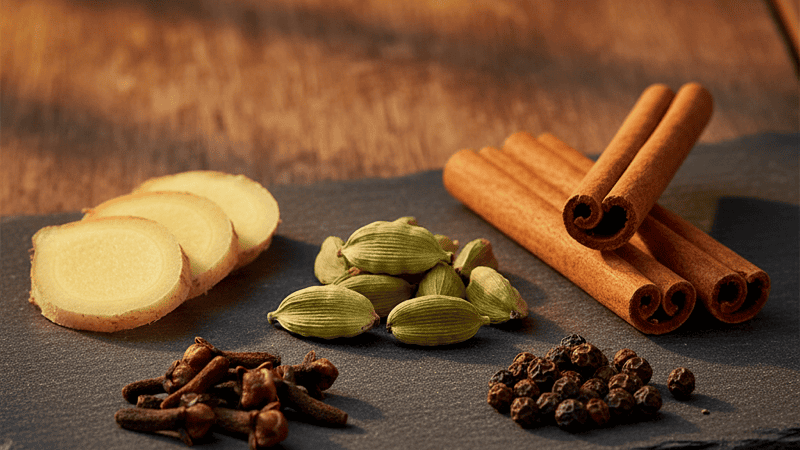
Five Spices That Build Every Great Cup of Chai
You could spend a lifetime exploring the hundreds of spice combinations used in chai across India, Turkey, and the Middle East. But here is the thing — you do not need to start there. Every version of masala chai worth drinking traces back to the same five foundational spices. The ones that have anchored the blend for generations. The ones your grandmother would have reached for without a second thought.
Think of them as the gateway. Master these five essential chai spices and you will understand why chai tastes the way it does. After that, experimenting with extras like fennel, star anise, or saffron becomes intuitive rather than random. You start adding with purpose instead of guessing.
So what are these five spices, and why do they matter? Let me walk you through each one — what it does in your cup, how to buy the good stuff, and exactly how much to use. Whether you are brewing your first pot or your five-hundredth, this is the foundation everything else builds on.
1. Green Cardamom — The Soul of the Blend
If you had to pick one spice that defines masala chai, it would be green cardamom. No contest. Those small green pods carry an aroma that is simultaneously floral, citrusy, and slightly minty — and there is nothing else in your spice rack that smells quite like it.
I remember the first time I cracked open a fresh cardamom pod and held it to my nose. It smelled like a garden and a sweet shop had somehow merged. That single moment is what pulled me into taking chai seriously.
What Cardamom Does in Your Cup
Cardamom brings sweetness without sugar. It rounds out the tannins in black tea and creates that signature fragrance that hits you before the cup even reaches your lips. It also adds a cooling sensation on the palate that counterbalances the heat from ginger and pepper — a natural balancing act that makes the whole blend feel harmonious rather than chaotic.
Cardamom’s complex aroma comes from two main compounds: α-terpinyl acetate, which contributes the signature sweet, floral character, and 1,8-cineole (also found in eucalyptus), which adds that subtle medicinal freshness underneath. That interplay of sweetness and coolness is why cardamom has been used in Ayurvedic medicine for centuries as a digestive aid and breath freshener.
How to Use Cardamom in Chai
Buy whole green pods, not the pre-ground powder. The moment cardamom is ground, its essential oils start evaporating. Pre-ground cardamom from a grocery store shelf has lost most of what makes it special.
Crack each pod with the flat side of a knife to expose the tiny black seeds inside — that is where all the essential oil lives. Use two to three pods per cup. Drop them in at the very start when you add water to the pot so they have maximum time to release their flavor. Some people crush the seeds separately and discard the husk, but I prefer leaving the whole cracked pod in the pot for a gentler infusion.
Buying Tip
Look for plump, bright green pods. If they are pale, bleached, or feel hollow when you squeeze them, the oils have degraded. Indian grocery stores almost always have better cardamom at lower prices than mainstream supermarkets. If you have one nearby, start there.
2. Fresh Ginger — The Engine of Every Great Chai
Ginger is the spice that separates memorable chai from forgettable chai. Full stop. It provides a bright, peppery heat that wakes up every other ingredient in the pot and gives the whole cup a sense of energy and vitality.
Have you ever had a cup of chai that felt flat, even though it had cardamom and cinnamon in it? Nine times out of ten, the ginger was either missing or dried. Fresh ginger is not optional — it is the engine.
What Ginger Does in Your Cup
Fresh ginger adds warmth and bite. The compound responsible is gingerol, which converts to shogaol when heated — producing that deeper, more pungent warmth you taste in a properly simmered chai versus a quickly steeped one. This is one of the reasons simmering matters so much in chai brewing. The longer ginger cooks, the more its flavor profile develops.
Beyond flavor, ginger stimulates digestion and has well-documented anti-nausea and anti-inflammatory properties. There is a reason chai is the first thing many Indian households reach for when someone feels under the weather. Multiple meta-analyses have found that daily ginger supplementation significantly reduces C-reactive protein levels — a key inflammation marker — with reductions averaging around 0.8 mg/L across studies.
How to Use Ginger in Chai
Always use fresh ginger root, never dried powder. The flavor difference is enormous. Dried ginger tastes sharp and one-dimensional. Fresh ginger unfolds in layers — spicy, bright, slightly sweet.
Slice a one-inch piece into thin coins or crush it with the flat of your knife. Crushing releases more surface area and extracts faster. It goes into the pot with the water and spices at the very beginning. If you want a stronger ginger punch, grate it on a microplane instead of slicing.
Buying Tip
Choose ginger with smooth, taut skin. Wrinkled skin means it has been sitting around too long and the volatile oils have started to fade. Here is a trick most people do not know: store unused ginger in the freezer. It grates beautifully straight from frozen, and it keeps for months without losing potency.
3. Cinnamon — The Quiet Sweetener
Cinnamon does something subtle but important in chai: it adds natural sweetness that lets you use less sugar without feeling like you are missing anything. It works in the background, rounding out the sharp edges of ginger and pepper, smoothing the whole blend into something cohesive.
What Cinnamon Does in Your Cup
A single stick of cinnamon contributes a warm, woody sweetness that blends seamlessly with cardamom. It also has a calming effect on the overall flavor profile, preventing the ginger and pepper from becoming too aggressive. Think of it as the diplomat of the spice blend — it keeps the peace.
Beyond flavor, cinnamon is one of the more interesting functional spices in the blend. Multiple clinical studies have shown it can improve insulin sensitivity and support blood sugar regulation. For people watching their glucose levels, this makes a properly spiced chai a surprisingly smart daily choice.
How to Use Cinnamon in Chai
Use one small stick (about two inches) per pot. Break it in half to expose more surface area. Ceylon cinnamon is preferred — it is milder, more complex, and has lower coumarin content than the harsher Cassia variety that dominates most grocery store shelves.
Do not use ground cinnamon in stovetop chai. It dissolves into a gritty sediment that makes the texture unpleasant. Sticks release flavor slowly and cleanly during simmering, which is exactly what you want.
Buying Tip
Ceylon cinnamon sticks are thin and papery with multiple flaky layers. Cassia sticks are thicker and form a single tight scroll. If the label just says “cinnamon” without specifying the variety, it is almost certainly Cassia. For chai, it is worth seeking out Ceylon — the flavor difference is noticeable, and you will use less sugar as a result.
4. Cloves — Handle with Care
Cloves are the most potent spice in the Big Five. They bring a deep, warm, slightly numbing intensity that adds serious depth to chai — but they will take over the entire cup if you use even one too many. More than any other spice on this list, cloves demand respect and restraint.
What Cloves Do in Your Cup
Cloves contribute a rich aromatic complexity that no other spice replicates. The flavor is warm, sweet, and slightly bitter, with that distinctive numbing sensation on the tongue. The compound responsible is eugenol, which makes up roughly 70 to 90 percent of clove essential oil. Eugenol has strong antiseptic and analgesic properties — it is the same compound dentists have historically used as a topical anesthetic.
In chai, cloves add a bass note. If cardamom is the melody and ginger is the rhythm, cloves are the deep hum underneath everything else. Without them, the blend sounds incomplete. With too many, they drown out the rest.
How to Use Cloves in Chai
Two to three whole cloves per pot is the right range. That is not a typo — you genuinely need that few. Start conservative, taste the result, and only add more once you know how they play with your other proportions.
Never grind cloves for chai. Whole cloves release their oils gradually during simmering. Ground cloves dump everything at once and create an overwhelmingly medicinal flavor. The whole-spice approach gives you control.
Buying Tip
Good cloves should feel slightly oily when you press them between your fingers. If they are dry and brittle, they have lost their essential oils. Here is a simple freshness test: drop a clove in a glass of water. Fresh cloves float vertically or sink. Stale cloves float horizontally on their side. Try it — it works every time.
5. Black Pepper — The Invisible Backbone
Black pepper is the spice you will never consciously taste in a finished cup of chai, but you will absolutely notice something missing if you leave it out. It is the glue that ties the blend together — amplifying every other flavor without drawing attention to itself.
Most people are surprised to see pepper in a tea recipe. But once you understand what it does, you will never skip it again.
What Black Pepper Does in Your Cup
A few cracked peppercorns add a gentle background heat that amplifies every other spice in the mix. The effect is subtle but real — pepper makes the cardamom smell more fragrant, the ginger taste more alive, and the cinnamon feel warmer.
The reason lies in piperine, the compound that gives pepper its bite. Piperine has a remarkable property: it enhances the bioavailability of other beneficial compounds. This means it helps your body absorb the good stuff from every other spice in the pot more effectively. The anti-inflammatory benefits of ginger, the blood sugar effects of cinnamon — piperine makes all of them more accessible to your body. That is not marketing hype, it is pharmacology.
How to Use Black Pepper in Chai
Crack three to four whole peppercorns with the flat of a knife and add them with the rest of the spices. Do not use pre-ground pepper — it loses its aromatic complexity almost immediately after grinding and can make the chai taste dusty.
If you are sensitive to heat, start with two peppercorns. You should not taste “pepper” in the finished cup. If you do, you have used too many.
Buying Tip
Tellicherry peppercorns from India’s Malabar coast are considered the gold standard. They are larger, more aromatic, and more complex than generic black pepper. They are usually available at specialty stores or online, and a bag lasts months. Worth seeking out for chai and everything else you cook.
How to Store Your Chai Spices
You have invested in quality spices. Now do not ruin them with bad storage. Here are the rules.
- Keep whole spices in airtight containers. Glass jars with tight lids work best. Avoid plastic, which can absorb and transfer odors.
- Store away from heat and light. That spice rack above your stove looks great, but the heat degrades essential oils faster than almost anything.
- Never pre-grind in bulk. Grind or crack spices right before you brew. The flavor difference between freshly cracked cardamom and week-old powder is staggering.
- Whole spices last six months to a year. Ground spices lose potency within weeks. This is the single biggest argument for buying whole.
- Freeze ginger root. As mentioned earlier, frozen ginger grates perfectly and lasts for months.
Putting Them All Together
Here is a solid starting ratio for one pot (two cups) of masala chai:
- 4-6 green cardamom pods, cracked
- 1-inch fresh ginger, sliced or crushed
- 1 cinnamon stick (Ceylon preferred), broken in half
- 2-3 whole cloves
- 3-4 black peppercorns, cracked
Add all the spices to cold water, bring to a boil, and simmer for two to three minutes before adding your tea and milk. For the full step-by-step brewing technique, check our complete chai brewing guide.
Adjusting the Ratio to Your Taste
The ratio above is a starting point, not a commandment. Here are some common adjustments:
- Want more warmth? Add an extra half-inch of ginger or one more peppercorn.
- Prefer a sweeter, more aromatic cup? Use six cardamom pods instead of four, and add a slightly longer cinnamon stick.
- Like it bold and deep? One extra clove goes a long way — but never more than one at a time.
- Too spicy? Pull back on the ginger first. It is usually the culprit when chai feels too aggressive.
The beauty of brewing with whole spices is that you control every variable. Unlike instant chai powders or bottled concentrates, there is nothing locked in. You adjust, taste, and learn what your palate prefers.
Beyond the Big Five: What Comes Next
Once you are comfortable with the Big Five, the world opens up. Here are a few additions worth trying:
- Star anise adds a warm licorice note that pairs beautifully with cardamom. Use one small star per pot.
- Fennel seeds bring a delicate floral sweetness. A quarter teaspoon is enough.
- Nutmeg deepens the warmth and adds an almost creamy quality. A tiny grating — less than you think.
- Bay leaf contributes a subtle herbal complexity. One small leaf per pot.
- Saffron transforms the cup into something luxurious and is the signature spice in Kashmiri Kahwa, a regional variation worth exploring.
But those are refinements. The foundation is right here in these five spices. Get these right, and everything else becomes intuitive.
Why Whole Spices Beat Pre-Made Blends
You might be wondering: can I just buy a pre-mixed masala chai spice blend and call it done? You can, but here is why I do not recommend it for anyone who is serious about their chai.
Pre-ground blends lose potency fast. The essential oils that carry flavor and aroma start degrading the moment spices are ground. A jar of “chai masala” that has been sitting on a store shelf for three months tastes like a shadow of what fresh, whole spices deliver.
More importantly, you lose control. Every household in India has its own chai ratio — it is a personal thing, not a formula. If you always use a pre-made blend, you never learn what each spice contributes. You never discover that you love extra cardamom, or that you prefer less ginger in the evening. That discovery process is half the joy.
If you are curious about how the flavor difference between fresh spices and commercial products plays out, our instant vs authentic chai comparison covers it in detail. The short version: there is no comparison.
Start Here, Explore Forever
These five spices — cardamom, ginger, cinnamon, cloves, and black pepper — are the foundation of masala chai as it has been made for generations across India. Every regional variation, every family recipe, every chaiwallah’s secret blend starts with some version of this same core.
You do not need rare ingredients or special equipment. A saucepan, these five spices, strong black tea, and ten minutes of patience will produce a cup of chai that makes anything from a packet taste like flavored water. If you are still weighing your options between chai and other popular drinks, our chai vs matcha comparison breaks down how they differ on caffeine, flavor, and health benefits.
Grab some whole cardamom pods, a knob of fresh ginger, and get brewing. Your mornings are about to change.