Three Ways to Get Chai in Your Cup
Let’s be honest — not everyone has fifteen minutes and a fully stocked spice rack on a random Tuesday morning. And that is perfectly fine. The instant chai vs real chai debate has been going on for years, and the truth is more nuanced than most people think.
The chai world offers everything from tear-a-packet-and-stir powders to slow-simmered stovetop rituals, with bottled concentrates sitting comfortably in between. Each approach has its place. But they deliver wildly different experiences in terms of flavor, cost, health benefits, and the satisfaction of the process itself.
So if you are trying to figure out where to start — or wondering whether upgrading your brewing method is actually worth the effort — this is the breakdown you need. We will walk through all three options, compare them head-to-head, and give you an honest recommendation at the end.
Option 1: Instant Chai Powder
This is how most people in the West first encounter chai. Brands like Oregon Chai, Big Train, and Tazo sell pre-mixed powders that dissolve in hot water or milk. Scoop, stir, done. Thirty seconds and you have something warm and sweet in your hands.
But what exactly are you drinking?
What Instant Chai Powder Tastes Like
A sweet, consistent, mildly spiced drink. The flavor leans heavily toward cinnamon and vanilla, with sugar usually listed as the first or second ingredient. It tastes more like a dessert drink than traditional masala chai, and that is by design. These products are engineered for the broadest possible appeal — think of them as the gateway, not the destination.
If you have ever ordered a “chai tea latte” at a coffee chain and loved it, that flavor profile is exactly what instant powders are trying to replicate. (And if you are curious about what the word “chai” actually means, the answer might surprise you.)
The Trade-Offs of Instant Chai
Here is where things get uncomfortable:
- Sugar content is alarmingly high. Most instant chai powders pack 20 to 30 grams of sugar per serving. That is roughly the same as a candy bar. Some brands exceed 35 grams. If you are drinking this daily, you are adding a significant amount of sugar to your diet without realizing it.
- Spice complexity is almost nonexistent. The spice flavor comes from extracts and artificial flavorings, not whole spices. You get a one-dimensional warmth rather than the layered complexity of fresh cardamom, ginger, and cloves. If you have only ever tasted instant chai, you genuinely do not know what real spice depth tastes like yet.
- The ingredients list reads like a chemistry exam. Maltodextrin, natural flavors, silicon dioxide, dipotassium phosphate — these are shelf-stable products first and tea second. Most instant chai powders contain more filler than actual tea.
- Cost per cup sits in the mid-range. About $0.75 to $1.50 per serving depending on the brand. Not cheap enough to feel like a steal, not expensive enough to feel premium.
When Instant Chai Actually Makes Sense
Here is the thing — instant chai is not evil. It serves a purpose. It is fine for occasional indulgence or for situations where convenience genuinely matters: office kitchens where you cannot simmer a pot, hotel rooms during travel, or introducing someone to the general idea of spiced tea before they commit to buying whole spices.
Just do not mistake it for the real thing. That is like comparing instant ramen to a proper bowl of pho — technically both are noodle soup, but the experience is not even close.
Option 2: Chai Concentrates
Chai concentrates are the middle ground, and honestly? They do not get enough credit. Brands like Tazo, Bhakti, Third Culture, and Dona sell bottled syrups that you mix with equal parts milk (or your preferred milk alternative). Some are shelf-stable; others sit in the refrigerated section.
What Chai Concentrate Tastes Like
A significantly better flavor experience than instant powder. Good concentrates use real spice extracts or actual spice infusions, delivering recognizable ginger heat and cardamom aroma. The best ones taste like someone made chai and bottled it — because that is essentially what happened.
Bhakti, in particular, uses fresh pressed ginger that gives their concentrate a genuine kick. Dona’s version is made in small batches and tastes noticeably more complex than mass-market options. Third Culture’s Chai Concentrate bridges authentic South Asian flavors with modern convenience.
The difference between a cheap concentrate and a premium one is enormous. Do not judge the entire category by the worst entry.
The Trade-Offs of Chai Concentrates
- Sugar is still a factor for most brands. The majority of concentrates are pre-sweetened, though the trend is shifting — several brands now offer unsweetened versions. Always check the label. The unsweetened options give you full control over how sweet your cup ends up.
- Flavor control is limited by design. You cannot adjust the spice balance. If the brand leans heavy on cinnamon and light on ginger, that is what you get, cup after cup. Compare that to stovetop brewing where you can adjust spice ratios every single time.
- Cost per cup is the highest of all three methods. About $1.50 to $3.00 per serving. A single bottle makes four to six cups. That adds up quickly if you are a daily chai drinker — we are talking $45 to $90 per month.
- Shelf life after opening is short. Refrigerated concentrates need to be used within one to two weeks. If you only drink chai occasionally, you will end up pouring money down the drain — literally.
When Chai Concentrates Make Sense
Concentrates are great for people who want real chai flavor with minimal effort. They are also genuinely useful as a stepping stone on your chai journey. Once you taste what good spice balance can do — that interplay between ginger warmth, cardamom sweetness, and clove depth — you will probably want to start exploring from-scratch brewing.
They also make fantastic bases for chai cocktails, chai-spiced baking, and iced chai lattes in the summer. Not everything has to be about the purist experience.
Option 3: Loose-Leaf Stovetop Chai
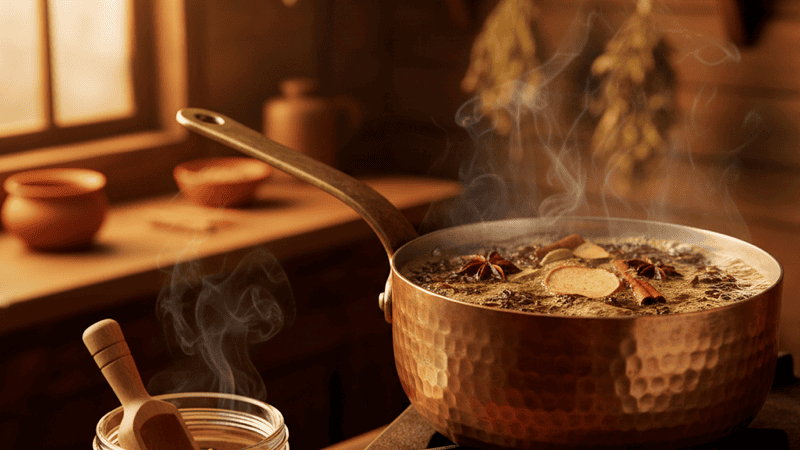
This is how chai has been made across India for generations. You simmer whole spices in water, add strong black tea and milk, and let everything meld on the stove. It takes about ten minutes. And those ten minutes will fundamentally change what you expect from a cup of chai.
What Authentic Stovetop Chai Tastes Like
The real thing. There is no other way to put it.
Stovetop masala chai delivers a depth of flavor that no powder or concentrate can replicate. You taste individual spice layers — the floral punch of cardamom, the sharp bite of fresh ginger, the warm sweetness of cinnamon bark, the background hum of black peppercorns — all woven into a rich, creamy base of malty Assam CTC tea and whole milk.
Every cup can be different depending on your mood and proportions. Feeling under the weather? Double the ginger and add a pinch of turmeric. Want something more aromatic and delicate? Crush extra cardamom pods and ease back on the cloves. That kind of real-time customization is something no pre-made product can offer.
The aroma alone fills your kitchen in a way that is hard to describe until you experience it. It smells like warmth itself.
The Trade-Offs of Brewing From Scratch
Be honest with yourself about these:
- Time investment is real. Ten minutes of active cooking is not nothing on a busy morning. You are standing at the stove, watching for the boil-over, adjusting the heat. It is meditative for some people and annoying for others.
- There is a genuine learning curve. Getting the chai spice ratios right takes a few attempts. Too many cloves will nuke the whole pot with a medicinal, overpowering taste. Too little ginger and the cup falls flat. Our brewing guide covers the exact proportions to start with.
- You need ingredients on hand. Fresh ginger, whole cardamom pods, cinnamon sticks, whole cloves, loose-leaf black tea, and full-fat milk. It is not grab-and-go. You need a small pantry investment upfront — though whole spices last months when stored properly.
- Cost per cup is the lowest by far. About $0.25 to $0.50 per serving once you have the spices stocked. The initial spice buy might run $15 to $20, but that stock will last you dozens of cups.
When From-Scratch Chai Makes Sense
When you want the best possible chai, period. Weekend mornings when you can actually enjoy the ritual. Afternoon breaks where the process itself becomes a form of unwinding. Impressing guests who have never smelled real masala chai coming off the stove. Or any time you can give ten minutes of undivided attention to the most rewarding drink you will ever make at home.
If you have never tried brewing chai from scratch, our complete brewing guide walks through the exact method step by step, and our essential spices guide covers the five spices you need to get started.
Side-by-Side Comparison: Instant vs Concentrate vs Loose-Leaf
Here is the full breakdown in one glance:
| Factor | Instant Powder | Concentrate | Loose-Leaf |
|---|---|---|---|
| Prep time | 30 seconds | 2 minutes | 10 minutes |
| Flavor depth | Low | Medium | High |
| Sugar control | None | Limited | Full |
| Cost per cup | $0.75-$1.50 | $1.50-$3.00 | $0.25-$0.50 |
| Monthly cost (daily) | $22-$45 | $45-$90 | $7-$15 |
| Spice complexity | Minimal | Moderate | Maximum |
| Health benefits | Negligible | Some | Full |
| Customization | None | None | Unlimited |
| Skill required | None | None | Some |
| Ingredient quality | Extracts/fillers | Real-ish spices | Whole spices |
That monthly cost row is worth a double-take. Brewing from scratch is not just the best-tasting option — it is the cheapest by a wide margin. The “convenience” of instant and concentrate methods comes with a real financial premium.
Health Benefits: What Each Method Actually Delivers
This is where the differences really matter if health is part of your motivation for drinking chai.
Instant Chai and Your Health
Frankly? Instant chai health benefits are minimal at best. The spice quantities are too small and too processed to deliver meaningful anti-inflammatory or antioxidant effects. Meanwhile, the sugar content actively works against you. If you are drinking chai for wellness reasons, instant powder is the wrong vehicle.
Concentrate Health Considerations
Better, but still compromised. Higher-quality concentrates use enough real ginger and turmeric to offer some anti-inflammatory benefits. But the pre-sweetened versions still add unnecessary sugar. If you go the concentrate route, choose unsweetened and add your own sweetener to taste.
Why Whole-Spice Chai Wins on Health
Authentic masala chai made with whole spices delivers the full spectrum of health benefits that have made this drink famous across cultures. Fresh ginger is a proven anti-inflammatory and digestive aid. Cardamom supports blood pressure regulation. Cinnamon helps moderate blood sugar response. Black pepper’s piperine is known for dramatically enhancing the bioavailability of certain compounds — most notably curcumin from turmeric, where studies show up to a 2,000% increase in absorption. Cloves pack one of the highest antioxidant loads of any food on earth.
When you brew with whole spices and control your own sugar levels, you are drinking something that genuinely supports your health. That distinction matters — and if you want the deeper science, our chai vs matcha comparison breaks down the specific health compounds in detail.
How to Upgrade Your Chai Method Step by Step
You do not have to make the leap from instant to stovetop overnight. Here is a practical progression that works:
Level 1: Improve Your Instant Game
- Switch to a brand with lower sugar (Vahdam makes a decent option)
- Add a pinch of ground cardamom and ground ginger to your instant powder
- Use heated whole milk instead of water for a richer body
- You will immediately taste the difference even these small changes make
Level 2: Graduate to Concentrates
- Start with Bhakti or Dona for the best spice-forward flavor
- Try both sweetened and unsweetened versions to find your preference
- Experiment with different milks — oat milk froths beautifully, while whole dairy gives the richest body
- Use this phase to learn what spice profiles you actually enjoy
Level 3: Go Full Stovetop
- Buy the five essential spices: cardamom, ginger, cinnamon, cloves, and black peppercorns
- Follow our step-by-step brewing guide
- Start with the basic recipe, then adjust ratios to your taste
- Batch-prep your spice blend on weekends to speed up weekday mornings
This progression typically takes people two to four weeks. And nearly everyone who reaches Level 3 never goes back.
The Honest Recommendation
Start wherever you are comfortable. There is no shame in instant chai — it is how millions of people discover that they like spiced tea in the first place. But know that what you are drinking is a distant echo of the real thing.
If you enjoy instant chai, try a good concentrate next. If the concentrate makes you curious about what fresh spices can do, grab some cardamom pods, a knob of ginger, and a bag of Assam CTC tea. The jump from concentrate to stovetop is where most people have their “wait, this is what chai is supposed to taste like” moment.
And here is what nobody tells you about making chai from scratch: once you do it a few times, the ten-minute routine stops feeling like a chore and starts feeling like the best part of your morning. The smell of cardamom and ginger simmering together, the sound of milk foaming as it reaches a boil, the first sip that hits you with layers of flavor you did not know tea could have. It becomes a ritual, not a task.
You do not have to be a purist. You just have to be willing to try the next step up.