What Is a Dirty Chai?
A dirty chai is a chai latte with one or two shots of espresso added. Spiced tea, steamed milk, espresso. Three ingredients, one cup. That is the whole concept.
Quick answer: Dirty chai = chai latte + espresso shot. Roughly 100-150mg caffeine per cup. Order it at any cafe that has both espresso and chai on the menu.
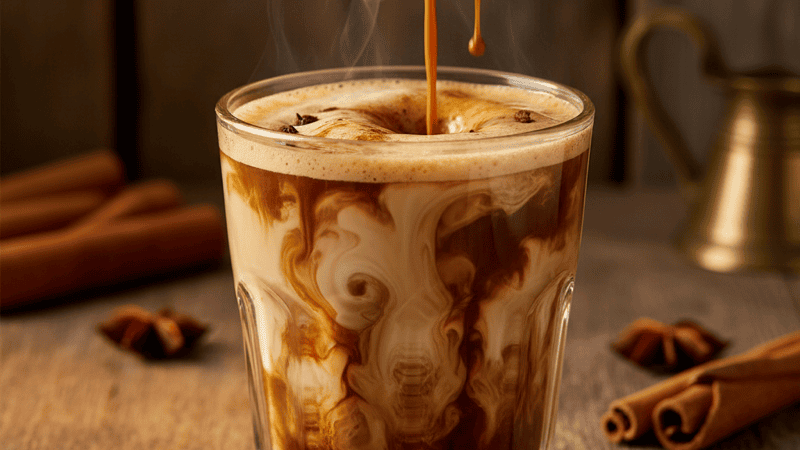
You are standing in a cafe, scanning the menu board, and there it is: dirty chai. Maybe a friend ordered one last week and you watched them take that first sip with a very specific expression — the one that says “where has this been my whole life?” Or maybe you have seen the drink trending on social media, golden-brown swirls layering in a clear glass, and you simply want to know what the fuss is about.
But that simplicity hides something genuinely interesting. What you are really looking at is the collision of two completely different beverage traditions — Indian spiced tea and Italian espresso culture — that somehow, against all odds, works beautifully together. And once you understand why it works, you will probably start ordering one yourself.
The Origin Story Nobody Agrees On
The exact origin of the dirty chai is fuzzy, which feels fitting for a drink that lives between two worlds. The most commonly repeated version traces it back to a coffee shop in England in the 1990s. A barista was making a chai latte for a traveler, accidentally pulled an espresso shot into the cup, and rather than toss it, handed it over. The traveler loved it so much that it became their go-to order, and they introduced it to cafes wherever they went. A happy accident became a global menu staple — or so the story goes.
Whether or not that particular version is true (and nobody has been able to confirm it definitively), the dirty chai gained serious traction through specialty coffee culture in Australia and the United States. Cities with strong cafe scenes like Melbourne and Portland became natural homes for the drink, bridging the gap between their coffee-obsessed regulars and the growing interest in spiced teas. Over time, it spread to mainstream chains and never looked back.
The name itself borrows from coffee shop lingo. A “dirty” drink generally means adding espresso to something that does not normally contain it — though the term also refers to the visual effect of dark espresso swirling into and “dirtying” a lighter-colored drink. You will also see dirty matcha on plenty of cafe menus, and some shops experiment with dirty horchata and other espresso-spiked creations. Strange naming convention, but it stuck.
Why It Actually Works: The Flavor Science Behind a Dirty Chai
On paper, espresso and spiced chai should not get along. Espresso is intensely bitter and acidic. Chai is warm, sweet, and aromatic. So why does combining them taste so good? A few things are happening at once.
Complementary Bitterness
Black tea already contains tannins that give it an astringent, slightly bitter edge. When espresso enters the picture, its bitterness layers on top of that existing foundation rather than clashing with it. Your palate reads them as related flavors, not competing ones. It is a bit like how dark chocolate and red wine work together — both are bitter, but in complementary ways.
Spice Meets Roast
Here is the really interesting part. The Maillard reaction compounds created during coffee roasting produce classes of flavor compounds — like pyrazines and furans — that also appear in toasted spices like cinnamon and cloves. There is a genuine chemical kinship between a well-roasted espresso and the warm spices in a masala chai blend. Your brain recognizes them as belonging in the same flavor family, which is why the combination feels natural rather than forced.
The Milk Bridge
Both chai lattes and espresso-based lattes rely on steamed milk as a base. This is not just a coincidence — milk fat helps preserve and carry volatile aromatic compounds from both the spices and the coffee, creating emulsions that enhance how you perceive flavor and texture. The result is a smoother, more integrated taste than you would ever get by mixing espresso and chai with water alone. The milk bridges the gap between the two beverages at a sensory level.
Dirty Chai vs. Regular Chai Latte: The Real Differences
This is probably what brought you here. How does a dirty chai compare to a regular chai latte, and is the upgrade worth it? Let us break it down.
| Regular Chai Latte | Dirty Chai | |
|---|---|---|
| Base | Spiced tea + milk | Spiced tea + milk + espresso |
| Caffeine | ~30-50mg (from black tea) | ~100-150mg (tea + espresso) |
| Flavor profile | Warm, sweet, aromatic | Bolder, roasty, more complex |
| Best for | Afternoon comfort | Morning energy boost |
| Sugar needed | Moderate | Less (espresso adds depth) |
The caffeine content is what draws most people in initially. A regular chai latte gives you a gentle, sustained lift from the L-theanine and caffeine combination in black tea — that calm, focused energy we talk about in our chai vs coffee breakdown. A dirty chai hits harder thanks to the espresso jolt, but you still get that smooth, spiced warmth underneath cushioning the ride.
Think of it this way: if a regular chai is a leisurely Sunday drive, a dirty chai is merging onto the highway with the windows down. Same car, different gear.
And about that sugar thing — this is underrated. Espresso adds a roasty depth and slight caramel bitterness that many people find reduces their need for added sweetener. If you normally dump two pumps of vanilla into your chai latte, try a dirty chai with one pump (or none) and see if the espresso fills that gap.
How to Order the Perfect Dirty Chai at a Cafe
Not all dirty chais are created equal. The difference between a great one and a forgettable one usually comes down to a few decisions you make at the counter.
Single Shot vs. Double Shot
A single shot dirty chai keeps the chai flavor dominant. You will taste cardamom and ginger first, coffee second. A double shot (sometimes called a “filthy chai” at some shops) puts espresso front and center. If this is your first time, start with a single shot. You can always go dirtier next time.
Ask About the Chai Base
This matters more than the espresso quality, honestly. If the cafe uses a syrup pump system, your dirty chai will taste like sweet coffee milk with a faint hint of cinnamon. Not great. Ask if they brew real chai or use a quality concentrate. A good homemade concentrate makes the difference between a dirty chai you remember and one you forget by the time you reach the parking lot.
Iced or Hot?
Here is a hot take (pun intended): iced dirty chais might actually be better than hot ones. Cold temperatures dull the espresso’s bitterness just enough to let the cardamom and ginger shine through more clearly. The spices become the star instead of playing backup. If you want to go deep on iced chai technique, our iced chai guide covers methods for keeping the flavor bold without dilution.
Your Milk Choice Matters
Oat milk has become the default dirty chai milk in many specialty shops, and for good reason. Its natural sweetness and creamy body bridge the coffee and spice flavors better than most alternatives. Whole dairy milk works beautifully too. Almond milk tends to let the espresso dominate too much, and coconut milk can compete with the spices. Experiment and find your lane.
The Controversy: Chai Purists vs. Dirty Chai Fans
Not everyone celebrates the dirty chai trend, and the pushback is worth hearing.
Chai traditionalists argue — with some justification — that adding espresso masks the delicate spice balance that makes a well-crafted masala chai special. If you have ever had a truly authentic masala chai made on a stovetop with whole spices simmered in milk, you understand. That interplay between ginger heat, cardamom fragrance, and the maltiness of strong black tea is its own kind of perfection. Drowning it in espresso can feel like putting ketchup on a steak.
Fusion enthusiasts counter that a dirty chai is the best gateway into the chai world for committed coffee drinkers. Plenty of dedicated espresso-only people have discovered they genuinely love chai through the dirty chai — the espresso was just the familiar handhold they needed to cross over. And many of them eventually graduate to straight chai.
Where does the truth land? Both sides have a point. A dirty chai is not a replacement for authentic masala chai any more than a cappuccino is a replacement for pour-over. They are different drinks for different moments. The dirty chai earns its place on the menu because it does something neither coffee nor chai can do alone.
How to Make a Dirty Chai at Home
You do not need a commercial espresso machine to make a solid dirty chai at home. Here is what works.
Equipment Options
- Espresso machine: The gold standard. Pull a proper shot.
- Moka pot: Produces a strong, concentrated coffee that works well as a substitute.
- AeroPress: Use the espresso-style recipe (fine grind, short steep) for a concentrated shot.
- Strong French press: Not ideal, but a small amount of very strong French press coffee can work in a pinch.
The Basic Ratio
For a 12-ounce dirty chai, you want roughly:
- 6 oz strong brewed chai (stovetop method or quality concentrate)
- 1-2 oz espresso (one or two shots)
- 4 oz steamed milk (or frothed milk if you have a frother)
- Sweetener to taste (start with less than you think you need)
The key is making sure your chai base is brewed strong enough to stand up to the espresso. A weak tea base will get completely steamrolled. If you are using a concentrate, go slightly more concentrated than the bottle suggests. For the full technique breakdown including spice ratios that hold their own against espresso, check our detailed dirty chai espresso guide.
Pro Tips
Temperature matters. Pull your espresso shot directly into the chai rather than letting it sit. Fresh espresso has brighter acidity that cuts through the spices nicely. Stale espresso just adds bitterness.
Layer it for presentation. Pour the chai and milk over ice first, then slowly pour the espresso over the back of a spoon to create those Instagram-worthy layers. They will mix when you stir, but the visual is worth it.
Try it with chai around the clock. A dirty chai hits different at 7 AM versus 3 PM. Morning dirty chais pair with the high-ginger blends we recommend for energy, while an afternoon version works better with a mellower, cardamom-forward base.
Dirty Chai Variations Worth Trying
Once you have the basic dirty chai dialed in, there is a whole world of variations.
- Dirty vanilla chai: Add a half teaspoon of real vanilla extract to the chai base before combining. The vanilla rounds out the espresso’s edges.
- Dirty chai with honey: Replace any sugar syrup with raw honey stirred into the hot chai. Honey and espresso have an underrated affinity.
- Iced dirty chai with cold foam: Top your iced dirty chai with vanilla cold foam for a textural contrast. Our iced chai techniques guide covers the cold foam method.
- Spicy dirty chai: Double the ginger and add a crack of black pepper to the chai base. The heat plays against the espresso in a way that wakes up your whole mouth.
- Dirty chai affogato: Pour a shot of espresso over a scoop of chai-spiced ice cream. Not a drink, technically, but nobody is complaining.
Should You Try a Dirty Chai?
If you love coffee but find yourself craving something warmer and more aromatic — yes. If you love chai but wish it carried a bit more punch on a groggy Monday morning — absolutely. If you are skeptical about mixing two great things into one cup, that is fair. But order a single shot dirty chai latte on ice next time you are at a decent cafe. Worst case, you tried something new. Best case, you just found your new default order.
The dirty chai is not trying to replace your morning espresso or your afternoon masala chai ritual. It occupies its own lane — a drink for people who refuse to pick sides between coffee and tea. And judging by how fast it is spreading across cafe menus worldwide, a lot of people are perfectly happy in that lane.