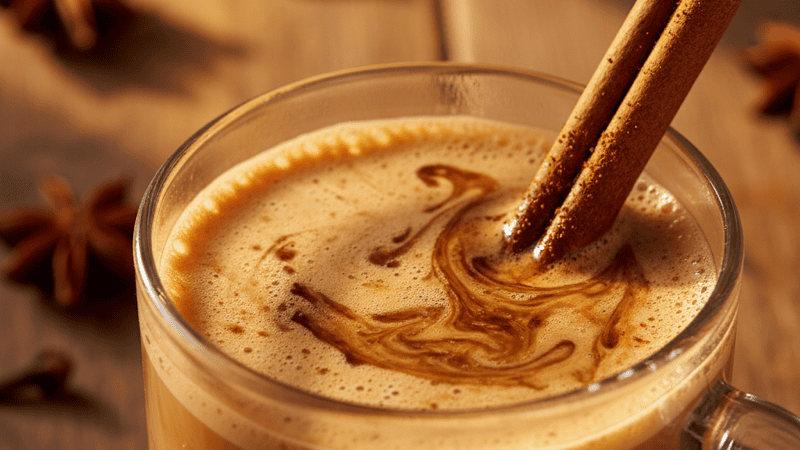
What Exactly Is a Dirty Chai?
A dirty chai is a masala chai latte with a shot of espresso pulled directly into it. That is the entire concept — tea, spices, milk, and coffee in one cup. The name sounds rebellious, and honestly, the drink kind of is. It breaks the unspoken rule that tea people and coffee people stay in their separate lanes.
The result, when made well, is something neither camp could produce alone. You get the warming complexity of chai spices layered beneath the roasted intensity of espresso, with milk tying the whole thing together. When made poorly? You get a muddy, bitter mess where neither the tea nor the coffee can breathe.
So what separates a great dirty chai latte from a forgettable one? It comes down to understanding what happens when you combine coffee acidity with tea tannins — and then making a few deliberate choices about ratios, temperatures, and timing. That is what this guide covers, from the chemistry to the step-by-step method you can use in your own kitchen.
If you are still figuring out the fundamentals of chai itself, start with our complete chai brewing guide and come back here when you are ready to add espresso to the equation.
The Science: Coffee Acidity vs. Tea Tannins
Before you start pouring shots into your chai, it genuinely helps to understand why this combination can go sideways fast.
Why Espresso Is Acidic
Espresso extracts roughly twice the concentration of dissolved solids compared to drip coffee. That concentrated extraction pulls out chlorogenic acids, quinic acid, and citric acid — the compounds responsible for espresso’s bright, sharp edge. A well-pulled shot balances that acidity with sweetness and body. A poorly pulled one just tastes sour.
The pH of a typical espresso shot lands between 5.0 and 5.5, making it moderately acidic. That acidity is what gives espresso its liveliness, but it also means it reacts with other compounds in unpredictable ways when you start mixing.
Why Chai Has Tannins
Black tea — the base of nearly every masala chai recipe — contains theaflavins and thearubigins, the tannin compounds responsible for that dry, slightly astringent mouthfeel. Tannins are not a flaw. They are what gives tea its structure and body, the same way tannins give red wine its grip. If you have ever wondered why chai is built on specific spices rather than random ones, part of the answer is that certain spices complement tannin structure rather than fighting it.
But here is the problem: when you combine high-acid espresso with high-tannin tea, the two amplify each other’s harshness. The acidity makes the tannins taste more astringent. The tannins make the acidity taste more sour. You end up with a cup that feels like it is attacking your palate instead of warming it.
The Fix: Milk Protein as a Bridge
This is where milk becomes essential — not just for flavor, but for chemistry. Casein proteins in milk bind to both tannins and acidic compounds, effectively neutralizing their sharpest edges. Full-fat milk does this best because it has the highest casein content. Oat milk works decently because its beta-glucans mimic some of that binding action. Almond milk is the worst choice here because it lacks the protein structure to do much buffering.
So the first rule of a great dirty chai: do not skimp on the milk, and do not use a thin milk alternative.
Dirty Chai vs. Regular Chai Latte: What Actually Changes
You might be thinking: is a dirty chai really that different from a standard chai latte? Yes. And the difference goes beyond just tossing espresso into the cup.
A regular chai latte is all about the interplay between spices, tea, milk, and sweetness. The flavor profile is round, warm, and comforting. There is no sharp edge. It is the drink equivalent of a wool blanket.
A dirty chai latte introduces a new axis entirely — roasted bitterness and acidity from espresso. That changes the balance of everything else. The spices now have to compete with coffee for your attention. The sweetness needs recalibrating. Even the milk has more work to do, buffering two separate sets of strong flavors instead of one.
The practical difference? You need a stronger chai base for a dirty chai than you would ever brew for a regular latte. If you use normal-strength chai, the espresso just bulldozes through it and you are left with a mildly spiced coffee. That is the mistake most cafes make, and it is the mistake we are going to avoid.
For context on why authentic brewing matters so much more than instant shortcuts, that article breaks down the flavor gap between real chai and the syrup-based stuff.
The Dirty Chai Ratio That Actually Works
Most cafes get this wrong because they treat a dirty chai like a regular latte with a tea bag dunked in it. That is not a dirty chai. That is a sad compromise. Here is the ratio I have landed on after testing more variations than I care to admit.
The Golden Ratio
| Component | Amount | Notes |
|---|---|---|
| Strong-brewed chai | 120 ml (4 oz) | Double the tea leaves you would normally use |
| Espresso | 30 ml (1 oz, single shot) | Medium roast, not dark |
| Steamed milk | 120 ml (4 oz) | Full-fat or oat |
| Sweetener | To taste | Honey or raw sugar work best |
The key insight: brew your chai concentrate at double strength. If you normally use one teaspoon of tea per cup, use two. If you normally simmer for five minutes, simmer for seven. The chai needs to be robust enough to stand up to espresso without getting bulldozed.
A single shot of espresso is enough. I know the temptation to go double, but two shots overwhelm the spices and you lose the entire point of the drink. If you want more caffeine, brew stronger chai — do not add more coffee.
Filthy Chai: The Double-Shot Variant
Now, some people specifically want that overwhelm. The filthy chai uses a double shot of espresso (60 ml) against the same chai base. It leans heavily toward coffee territory with chai spices playing a supporting role rather than co-starring. It is a legitimate drink, but know what you are getting into — it is basically a spiced latte at that point.
Step-by-Step: Making a Dirty Chai at Home
You do not need an espresso machine. You do need a stove and about fifteen minutes. Here is how to make dirty chai at home with equipment most kitchens already have.
Step 1: Brew a Concentrated Chai Base
Start with water in a small saucepan. Add your spices — crushed cardamom pods, a coin of fresh ginger, a cinnamon stick, two or three cloves, and a few black peppercorns. Bring to a boil and let the spices simmer for three minutes.
Add two teaspoons of strong Assam or CTC black tea per cup. Reduce heat and steep for four minutes. The color should be deep amber, almost russet. If it looks like regular tea, it is too weak.
Add milk and bring back to a gentle simmer. Let it foam up once, then kill the heat. Strain into your cup. You should have about 120 ml of concentrated, spiced, milky chai.
For the full technique on nailing the spice blend, check out our essential chai spices guide. And if you are curious about less traditional additions — rose petals, lavender, hibiscus — our floral chai guide covers how those botanicals work alongside standard masala spices.
Step 2: Pull Your Espresso (or Fake It)
If you have an espresso machine, pull a single shot using a medium roast bean. Dark roasts add too much bitterness on top of the tea tannins. Medium roasts bring chocolate and caramel notes that complement the spices beautifully.
No espresso machine? Here are two solid alternatives:
- Moka pot: Produces a concentrated brew that is close enough to espresso for this purpose. Use a medium-fine grind and fill the water chamber to just below the safety valve.
- AeroPress: Use the inverted method, a fine grind, and 30 seconds of steep time with 50 ml of water. You want something thick and punchy.
Either way, aim for a concentrated shot of about 30 ml. The goal is intensity, not volume.
Step 3: Combine with Intent
Pour the espresso shot directly into the chai. Do not add it to an empty cup and pour chai on top — the order matters because you want the espresso to integrate into the warm chai rather than sitting as a separate layer.
Stir once. Taste. Add sweetener if needed. Honey works particularly well because its floral notes complement both the chai spices and the coffee.
Caffeine in a Dirty Chai: How Does It Stack Up?
This is a question people ask constantly, and the answer is genuinely interesting.
A standard cup of masala chai made with black tea contains roughly 50-70 mg of caffeine. A single shot of espresso adds 63 mg on average. So a dirty chai delivers somewhere around 115-135 mg of caffeine per serving — roughly equivalent to a large drip coffee but delivered in a completely different way.
Why does that matter? Because caffeine from tea is absorbed more slowly thanks to L-theanine and the tannin-caffeine binding effect. You get a steadier, longer energy curve instead of the sharp spike-and-crash that straight espresso delivers. The espresso in a dirty chai gives you the initial kick, while the tea-bound caffeine extends the tail. It is genuinely the best of both worlds if you are someone who calibrates your caffeine intake throughout the day.
For comparison, a matcha latte contains about 70 mg of caffeine per serving — making a dirty chai roughly double the caffeine load of matcha.
The Five Mistakes That Ruin a Dirty Chai
I have made all of these so you do not have to.
1. Weak Chai Base
The most common mistake, by far. Regular-strength chai cannot compete with espresso’s intensity. The coffee just erases the spices and you are left wondering why you bothered. Double your tea leaves. Always.
2. Dark Roast Espresso
Dark roast espresso brings smoky, burnt, and bitter flavors that clash with tea tannins. The combination tastes acrid. Medium roast brings sweetness and chocolate that play nicely with cardamom and cinnamon.
3. Over-Steeping the Tea
If you steep your black tea for more than five minutes, tannin extraction skyrockets. Those extra tannins react with espresso acids and create a punishingly astringent cup. Keep it to four minutes maximum.
4. Using Water Instead of Milk
Some recipes have you brew the chai in water only, then add milk at the end. For a regular chai, that works fine. For a dirty chai, you want milk simmered with the tea so the casein has time to bind with tannins before the espresso arrives. It makes a noticeable difference in smoothness.
5. Sweetening Too Early
Add sweetener after combining the chai and espresso. The espresso changes the flavor balance, and what seemed like the right amount of sugar in plain chai might be too much or too little once coffee enters the picture. Taste first, then adjust.
Iced Dirty Chai: The Summer Version
An iced dirty chai is arguably even better than the hot version, and here is the science behind why: cold temperatures suppress bitterness perception while highlighting sweetness and spice aroma. Everything that makes a hot dirty chai tricky to balance gets easier when you serve it cold.
Brew your chai concentrate hot and strong as described above, but use half the milk during brewing. Let it cool to room temperature, then refrigerate. When ready to serve, fill a tall glass with ice, pour in the cold chai concentrate, add your espresso shot (hot — the thermal contrast is part of the experience), and top with cold milk.
The espresso cascading through the iced chai creates a beautiful marbled effect. It looks as good as it tastes.
Want a more indulgent riff? Try a dirty chai frappe — blend the cold chai concentrate with ice, a splash of vanilla extract, and your espresso shot. Top with a spoonful of whipped cream. It is dangerously easy to drink.
Dirty Chai Variations Worth Trying
Once you have the basic ratio dialed in, these variations keep things interesting:
- Dirty Vanilla Chai: Add half a teaspoon of vanilla extract to the chai base. Vanilla bridges coffee and spice flavors in a way that feels almost unfair.
- Dirty Chai with Honey and Black Pepper: Extra cracked black pepper in the chai plus a drizzle of hot honey. The heat layers are incredible.
- Dirty Chai Affogato: Pour a single shot of espresso over a scoop of vanilla ice cream, then top with concentrated chai. Dessert and drink in one.
- Dirty Rooibos Chai: For a caffeine-conscious option, use a strong rooibos chai base instead of black tea. You lose some tannin structure, but the espresso compensates.
- Dirty Chai Old Fashioned: Not technically a latte, but worth mentioning — our boozy chai cocktails guide covers a chai-spiced espresso martini that starts from a dirty chai base and goes somewhere very interesting.
Why Cafes Get It Wrong (and How to Order Smarter)
Most cafes make a dirty chai by adding a shot of espresso to their standard chai latte, which is usually made from a pre-mixed syrup or powder. That syrup-based chai is too sweet, too one-dimensional, and not strong enough to stand up to espresso. It is the same instant vs authentic quality gap you see with regular chai, except espresso magnifies the problem.
When ordering at a cafe, ask these questions:
- Is the chai brewed from scratch or from a concentrate? Scratch-brewed is always better.
- Can you make the chai extra strong? Most baristas will add an extra pump or extra steep time if you ask.
- What roast is the espresso? If they only have dark roast, consider ordering a regular chai instead.
Or just make it at home. Twenty minutes of work, a fraction of the price, and a dramatically better cup. Seriously — once you have tasted a properly made dirty chai with real masala spices, the cafe version is hard to go back to.
The Bottom Line on Making a Perfect Dirty Chai
A dirty chai latte is one of those drinks that sounds like a gimmick but delivers genuine complexity when you treat it with respect. The key is understanding that you are merging two powerful flavor systems — coffee acidity and tea tannins — and using milk, sweetness, and the right ratios to make them complement rather than clash.
Brew your chai strong. Pull your espresso from a medium roast. Let milk do its chemical bridging work. And whatever you do, do not let any cafe convince you that dumping espresso into chai syrup counts as the real thing.
If this is your first step into what chai actually is beyond coffee shop menus, you are in for a ride. The rabbit hole goes deep, and it only gets better.