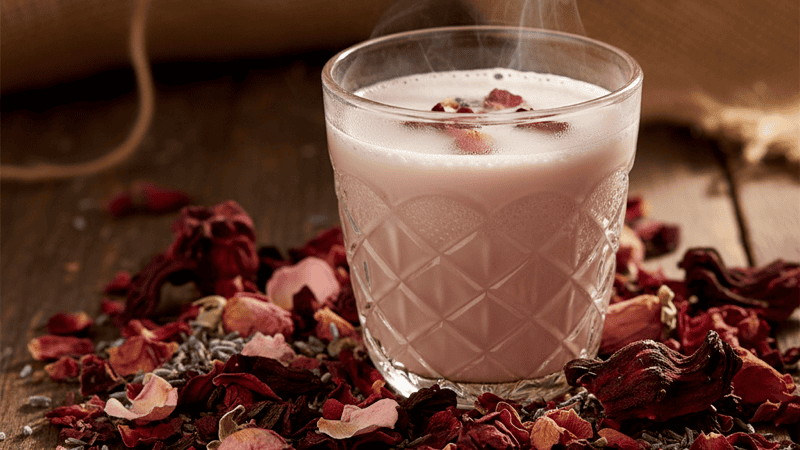
Why Flowers Belong in Your Floral Chai
Masala chai is built on a foundation of bold spices — ginger, cardamom, cinnamon, cloves, black pepper. That classic blend is perfect for cold mornings and rainy afternoons. But what about June? What about those days when you want chai’s ritual and warmth without feeling like you are wearing a wool sweater in 30-degree heat?
That is where floral chai comes in.
Adding flowers to chai is not some modern wellness invention. Rose petals have been steeped in Indian and Persian teas for centuries. Kashmiri noon chai uses rose water as a core ingredient. Moroccan tea culture incorporates orange blossom. In parts of Southeast Asia, hibiscus and butterfly pea flower show up in tea blends that predate any Instagram trend by generations.
So why does floral chai work so well? Because flowers contribute actual aromatic compounds that interact with traditional chai spices in genuinely interesting ways. Rose amplifies cardamom. Lavender softens ginger’s bite. Hibiscus adds tartness that makes the whole blend feel lighter and brighter.
If you have ever thought chai was strictly a winter drink, a good floral chai blend will change your mind completely. It bridges the gap between tea and aromatherapy, between tradition and experimentation.
This guide covers the three most accessible and versatile floral additions: rose, lavender, and hibiscus. For each, I will explain the flavor science, the correct ratios, the spice pairings that work, and the common mistakes that turn a beautiful floral chai into potpourri water.
Rose Petal Chai: Fragrance That Amplifies Cardamom
Rose is the most natural floral addition to chai because it shares key aromatic compounds with green cardamom — specifically linalool and geraniol. When you steep rose petals alongside cracked cardamom pods, those shared compounds reinforce each other and the fragrance becomes something greater than either ingredient alone.
Have you ever wondered why rose and cardamom appear together in so many South Asian desserts? It is not a coincidence — the chemistry is pulling them together.
What Rose Does to Chai
Rose petals contribute a sweet, honeyed fragrance without adding significant sweetness to the actual liquid. The flavor is delicate — more perfume than taste — which means rose works best when it supports the existing spice blend rather than trying to dominate it.
The real magic is in the aroma. Sipping a rose cardamom chai is an experience where your nose gets one message (garden, floral, almost intoxicating) and your palate gets another (warm, spiced, grounding). That contrast is what makes people reach for a second cup.
If you enjoy the way espresso transforms traditional chai in a dirty chai latte, think of rose as another axis of transformation entirely — subtle rather than bold, aromatic rather than caffeinated.
The Rose Chai Recipe
For one cup:
- 1 tablespoon dried food-grade rose petals (or 2 tablespoons fresh)
- 2 cracked green cardamom pods
- 1 small cinnamon stick
- 1 teaspoon loose-leaf black tea (Darjeeling works beautifully here)
- 150 ml water
- 100 ml whole milk
- Sweetener to taste (honey recommended)
Method:
- Add water, rose petals, cardamom, and cinnamon to a saucepan.
- Bring to a gentle boil, then reduce heat and simmer for 3 minutes. The water should turn a soft pink.
- Add tea leaves. Steep for 3 minutes on low heat — no more, or the tannins will bury the rose.
- Add milk and bring back to a simmer. Let it foam once.
- Strain and sweeten. A drizzle of honey is ideal because its floral notes complement the rose.
Rose Chai Mistakes to Avoid
Trust me on these — I have made every one of them.
- Using too many petals. More rose does not mean more flavor — it means soapy, perfume-like bitterness. One tablespoon per cup is the ceiling.
- Using rose water instead of petals. Rose water is concentrated and easy to over-pour. If you must use it, add two drops at the end, not during brewing.
- Pairing rose with ginger. Ginger’s sharp heat clashes with rose’s delicacy. Skip the ginger in this variation, or use the smallest possible coin if you absolutely need it.
- Over-steeping. Rose petals release their best flavor in the first 3 minutes. After that, the tannins take over and you lose the floral character entirely.
Best Spice Partners for Rose
| Spice | Why It Works |
|---|---|
| Cardamom | Shared aromatic compounds (linalool/geraniol) create synergy |
| Cinnamon | Sweet warmth without competing heat |
| Saffron | Luxurious Persian-style combination, pairs with rose perfectly |
| Fennel | Adds gentle anise sweetness that supports floral notes |
If you want to explore the traditional spice fundamentals before branching into florals, our guide to chai’s essential spices covers the foundation.
Lavender Chai: A Calming Floral Chai for Any Evening
Lavender is a trickier addition than rose because its flavor is stronger and more polarizing. Get the ratio right and you have a floral chai that is soothing, complex, and genuinely calming. Get it wrong and you are drinking something that tastes like a scented candle.
The difference between a good lavender chai and a terrible one comes down to quantity and variety.
Understanding Lavender Varieties
Not all lavender is created equal for culinary use:
- Lavandula angustifolia (English lavender): The best choice for chai. Sweeter, less camphor-heavy, with a honey-like quality. This is what you want.
- Lavandula x intermedia (lavandin): Stronger, more medicinal aroma. Works in cleaning products, not in your teacup.
- Lavandula stoechas (French lavender): Interesting in small quantities but can taste resinous.
Always buy food-grade, culinary lavender. The stuff sold for sachets and potpourri is often treated with chemicals you do not want in your drink.
What Lavender Does to Chai
Lavender contains linalool (calming, floral) and linalyl acetate (fruity, herbal). These compounds genuinely promote relaxation — lavender aromatherapy studies consistently show reduced cortisol levels and lower heart rate. Steeping lavender in hot chai makes those aromatic compounds bioavailable both through the steam you inhale and the liquid you drink.
In terms of flavor, lavender adds an herbal, slightly sweet, almost minty quality that tempers the boldness of traditional chai spices. It is like turning the volume down on a song just enough that you hear details you missed before.
This makes lavender chai an excellent choice for your evening wind-down routine. Where a standard masala chai might keep you wired before bed, a well-made lavender version threads the needle between comforting ritual and genuine relaxation.
The Lavender Chai Recipe
For one cup:
- 1/2 teaspoon dried culinary lavender buds (English lavender)
- 2 cracked green cardamom pods
- 1/4 teaspoon whole fennel seeds
- 1 thin slice fresh ginger (optional — keep it minimal)
- 1 teaspoon loose-leaf black tea
- 150 ml water
- 100 ml whole milk (or oat milk — its sweetness pairs well)
- Honey to taste
Method:
- Add water, lavender, cardamom, fennel, and ginger to a saucepan.
- Bring to a low boil, then reduce and simmer for 2 minutes only. Lavender turns bitter if over-extracted.
- Add tea leaves and steep for 3 minutes on low heat.
- Add milk, bring to a simmer, let it foam once.
- Strain immediately. Lavender should not continue steeping in the cup.
The Critical Rule: Half a Teaspoon Max
I cannot stress this enough. Half a teaspoon of lavender buds per cup is the maximum. Start with a quarter teaspoon if you have never tried it. Lavender is not a spice you can be generous with — its essential oils are potent and become overwhelming quickly.
If your lavender chai tastes like soap, you used too much. Scale back. The flavor should be a whisper, not a shout.
Here is a useful mental model: think of lavender the way you think of salt. A pinch makes everything better. A handful ruins the entire dish. The best floral chai recipes treat lavender as a supporting actor, never the star.
Best Spice Partners for Lavender
| Spice | Why It Works |
|---|---|
| Cardamom | Both share linalool; the pairing feels natural |
| Fennel | Sweet anise rounds out lavender’s herbal edge |
| Vanilla | Added at the end, vanilla softens everything into dessert territory |
| Star anise | Bold but complementary; one whole star per pot is enough |
Hibiscus Chai: The Bold Floral Chai That Turns Heads
Hibiscus is the boldest of the three florals covered here, and it works completely differently in chai. Where rose and lavender add fragrance, hibiscus adds flavor — specifically, a cranberry-like tartness and a stunning deep red color that transforms the look of your cup.
Hibiscus is also the most natural choice for iced chai because its tartness becomes a strength when served cold. If you have been comparing chai vs matcha for your summer drink rotation, a cold hibiscus chai might just end that debate entirely.
What Hibiscus Does to Chai
Dried hibiscus flowers (technically the calyces of Hibiscus sabdariffa) are rich in anthocyanins — the same antioxidant pigments that make blueberries blue and red wine red. They are also loaded with citric and malic acid, which is why hibiscus tea tastes tart, almost like unsweetened cranberry juice.
In chai, that tartness does something unexpected: it brightens the spice blend. The acid lifts heavy spices the way a squeeze of lemon lifts a rich soup. Cinnamon tastes sweeter. Ginger tastes sharper. The whole cup feels more vibrant and alive.
Research also suggests that hibiscus lowers blood pressure — a systematic review in Nutrition Reviews found that hibiscus tea consumption reduced systolic blood pressure by an average of 7.6 mmHg in hypertensive adults. Not bad for a flower.
The Hibiscus Chai Recipe
For one cup:
- 1 tablespoon dried hibiscus flowers
- 2 whole cloves
- 1 small cinnamon stick
- 1 coin fresh ginger
- 1 teaspoon loose-leaf black tea (Assam works well — its maltiness balances the tartness)
- 200 ml water
- 50 ml milk (less milk than usual — you want the ruby color to show)
- Sweetener to taste (sugar or agave — this one benefits from added sweetness)
Method:
- Add water, hibiscus, cloves, cinnamon, and ginger to a saucepan.
- Bring to a boil, reduce heat, and simmer for 4 minutes. The liquid will turn a deep crimson.
- Add tea leaves and steep for 3 minutes.
- Add a splash of milk — just enough to add body without turning the color muddy brown.
- Strain and sweeten. Hibiscus chai almost always needs sweetener because of its natural tartness.
Iced Hibiscus Chai (The Star of Summer)
This is where hibiscus chai truly shines. Brew the above recipe but skip the milk during brewing. Let the concentrate cool to room temperature, then refrigerate for at least two hours.
To serve: fill a glass with ice, pour over the cold hibiscus chai concentrate, and add a splash of cold milk or coconut cream. The color contrast — deep red chai swirling with white milk — is genuinely stunning.
Garnish with a few dried hibiscus petals floating on top if you are feeling theatrical. Nobody will judge you.
Want to take this in an adults-only direction? A splash of rum or gin turns iced hibiscus chai into a seriously impressive chai cocktail. The tartness of the hibiscus works like a citrus element in the drink, so you barely need to modify the recipe.
Best Spice Partners for Hibiscus
| Spice | Why It Works |
|---|---|
| Cinnamon | Sweet warmth counters hibiscus tartness |
| Cloves | Aromatic intensity matches hibiscus’s bold flavor |
| Ginger | Sharp heat plus tart acid creates lively brightness |
| Black pepper | Just a few corns; the heat plays off the tartness beautifully |
Blending All Three: The Garden Chai
If you want the ultimate floral chai experience, you can combine rose, lavender, and hibiscus in a single blend. The trick is adjusting proportions so that no single flower dominates.
The Garden Chai Blend (per cup):
- 1/2 tablespoon dried rose petals
- 1/4 teaspoon dried lavender buds
- 1/2 tablespoon dried hibiscus flowers
- 2 cracked cardamom pods
- 1 small cinnamon stick
- 1 teaspoon black tea
Brew using the standard method: simmer flowers and spices in water for 3 minutes, add tea for 3 minutes, add milk, strain. The result is a floral chai that is tart and aromatic all at once — complex without being confused.
Why does this combination work when it seems like it should be too much? Because each flower operates in a different register. Rose handles the high notes (fragrance), lavender fills the mid-range (herbal calm), and hibiscus anchors the low end (tartness and body). Together they create a full-spectrum floral chai experience.
A word of caution: this garden blend is best appreciated by people who already know they enjoy floral flavors. If you are new to the concept, start with a single-flower version first and work your way up. There is no rush.
Where to Source Floral Chai Ingredients
Quality matters enormously with edible flowers. The difference between a transcendent floral chai and a disappointing one often comes down to ingredient freshness, not technique. Here is what to look for:
- Buy food-grade, organic flowers. Flowers sold for decoration may be treated with pesticides or dyes. This is non-negotiable.
- Check for vibrant color. Dried rose petals should be deep pink or red, not brown. Hibiscus should be dark crimson. Faded flowers are old flowers.
- Smell before buying. Good dried florals should smell fragrant even in their dried state. If they smell like nothing, they will taste like nothing.
- Store in airtight containers away from light. Floral ingredients lose potency faster than whole spices — think weeks, not months.
- Buy in small quantities. Unlike whole cinnamon sticks or cardamom pods, dried flowers degrade quickly. Purchase what you will use within 2-3 months.
Specialty tea shops, Middle Eastern grocery stores, and online spice merchants are your best sources. Avoid the bulk bins at health food stores — turnover is unpredictable and the flowers may have been sitting there for months.
If you are comparing the convenience of pre-made blends versus sourcing your own ingredients, the same logic from instant vs authentic chai applies here. Fresh, whole ingredients will always outperform the pre-packaged alternative.
The Seasonal Angle: Floral Chai for Spring and Summer
Traditional masala chai is a cold-weather drink. Floral chai is how you keep your chai ritual alive when the weather turns warm. Here is a simple seasonal rotation:
- March-April: Rose cardamom chai (transitional, still warm but lighter)
- May-June: Lavender chai lattes (calming, lighter body)
- July-August: Iced hibiscus chai (cold, tart, refreshing)
- September: Garden chai blend (the farewell-to-summer cup)
- October onward: Back to traditional masala chai with the classic five spices
Does this mean you cannot drink floral chai in December? Of course not. A rose cardamom chai is beautiful on a cold evening. But the seasonal rotation gives you a framework for variety, and variety is what keeps any chai practice from going stale.
If you are curious about how chai adapts to different times of day as well as different seasons, our chai around the clock guide covers morning versus evening blends in detail.
Getting Started with Your First Floral Chai
If all three flowers feel overwhelming, here is the simplest possible starting point: make your regular chai recipe tomorrow morning, but toss in half a tablespoon of dried rose petals at the beginning. That is it. No other changes. You will notice the fragrance shift immediately, and you will understand why floral chai has been a tradition across cultures for hundreds of years.
From there, experiment. Try lavender on a quiet evening. Try hibiscus when friends come over and you want to serve something visually striking. Each flower opens a different door, and each door leads somewhere genuinely worth exploring.
Floral chai is not a replacement for the classic. It is an expansion — proof that chai is a framework flexible enough to absorb new ingredients without losing its identity. Start with one flower, get the ratio right, and your summer chai game will never be the same.