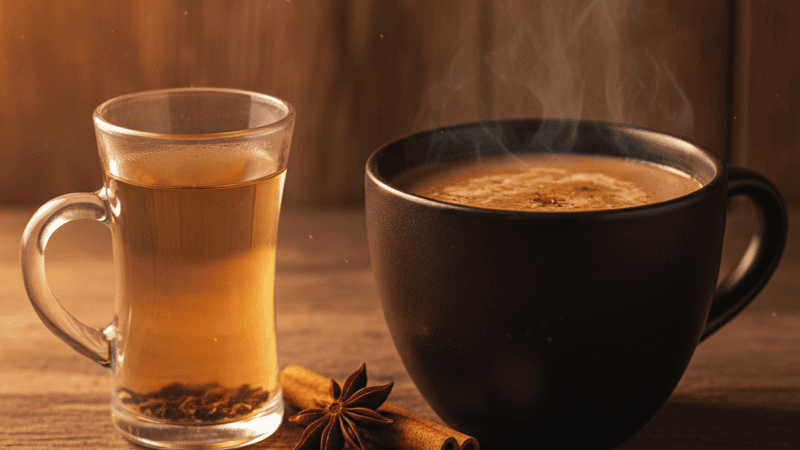
The Disappointing First Cup
You bought the spices. You followed a recipe you found online. You simmered, you strained, you took that first hopeful sip and — something is wrong. Maybe it is thin and watery, barely registering as chai. Or maybe it is bitter — harsh, astringent, and unpleasant in a way that makes you wonder if you ruined the whole batch. Either way, it tastes nothing like the rich, creamy, punch-you-in-the-face masala chai you had at that Indian restaurant or that one friend’s house.
What went wrong?
Almost certainly one of three things. Maybe all three at once, which would explain a lot. These are the chai brewing mistakes beginners make, and they are all fixable in your next pot. The gap between “spicy water” or “bitter mess” and “proper chai” is not about talent or special equipment. It is about understanding three basic principles that nobody bothers to explain in those two-paragraph recipe cards you find online.
Mistake 1: You Are Not Boiling the Tea Long Enough
This is the big one. The mistake that accounts for probably seventy percent of all disappointing homemade chai.
If you grew up making tea the Western way — kettle, teabag, steep for three to five minutes, remove — you have been trained to treat tea gently. Do not over-steep or it will get bitter. Handle with care. Keep the water just below boiling.
Throw all of that out the window. Masala chai is not steeped. It is boiled.
That single sentence is the most important thing in this entire article. Western tea rules do not apply here. Not even a little bit.
The Science of Why Boiling Matters
Black tea leaves contain three categories of compounds that matter for flavor: polyphenols (which include tannins), caffeine, and various aromatic compounds. In a gentle steep, you extract mostly caffeine and the lighter aromatics. The result is a thin, clean, mild tea — exactly what you want for a delicate Darjeeling or an English Breakfast served with a splash of milk.
But chai is not trying to be delicate. Chai needs to hold its own against whole milk, sugar, and a squad of aggressive spices. For that, you need full tannin extraction — those heavier polyphenol compounds that give tea its body, its astringency, and that deep reddish-brown color.
Here is why tannins matter so much: they are the structural backbone of the drink. Without them, the spices and milk overpower the tea, and you end up with spiced milk — pleasant but not chai. With full tannin extraction, the tea pushes back. It stands toe-to-toe with the ginger and cardamom. The drink has tension, depth, and balance.
Tannins extract slowly and require sustained high heat. A three-minute steep in hot water pulls some, but far less than what you need for chai. A five-minute rolling boil pulls significantly more. That is the difference between watery and full-bodied.
The Fix
After adding your tea leaves (use Assam CTC — the small granular kind, not fancy whole leaves), bring the pot to a full boil and keep it there for three to five minutes minimum. The water should be a deep, almost opaque reddish-brown before you add milk. If you can still see the bottom of the pot through the liquid, you have not boiled it long enough.
Yes, this would ruin a cup of green tea. But you are not making green tea. You are making chai. Assam CTC was literally designed to withstand aggressive brewing — the crush-tear-curl process creates dense granules that release flavor under high heat and pressure. You cannot over-extract them the way you can a delicate whole-leaf tea.
How do you know when the boil has done its job? Look at the color. The liquid should be nearly opaque — a dark reddish-brown that looks closer to black coffee than to tea. If someone poured it into a cup in front of you, it should look almost intimidatingly strong. That is exactly what you want, because the milk is about to dilute it by half.
The Common Objection
“But won’t it taste bitter?” Nope. And here is why — the milk proteins you add in the next step (specifically casein) bind directly to tannins and neutralize the astringency. This is the same reason people add milk to strong English tea. The tannins provide body and color without bitterness, as long as there is enough milk protein to balance them. It is a beautiful chemical partnership.
Mistake 2: Your Water-to-Milk Ratio Is Way Off
Here is a ratio problem that trips up almost everyone the first few times: you are using too much water and not enough milk.
Most recipes you find online call for something like “two cups water, one cup milk” or even “three cups water, half cup milk.” These ratios produce tea-flavored water with a splash of milk. It is technically chai. It is also technically disappointing.
I fell into this trap myself for months. I kept blaming my spices, my tea leaves, my timing. Turns out I was just drowning everything in water.
Why the Ratio Matters So Much
Milk does two things in chai, and both are non-negotiable.
First, it provides fat. And fat is a solvent for flavor compounds. Many of the essential oils released by your spices — the terpenes from cardamom, the gingerol from ginger, the eugenol from cloves — are fat-soluble. Water alone cannot carry them effectively. Without enough fat in the liquid, those flavor compounds either dissipate as steam or cling to the sides of the pot instead of ending up in your cup.
Think about it this way: spice oils are like essential oils. They do not dissolve in water. They dissolve in fat. If your chai is mostly water, most of those gorgeous spice flavors are literally floating away as steam or sticking to the metal of your pot. You are leaving the best part behind.
Second, milk provides body. That thick, creamy, almost velvety mouthfeel that makes great chai so satisfying? That comes from milk proteins and fat globules suspended in the liquid. More water means a thinner body. The equation is simple — more milk, more richness.
The Fix
Start with a 1:1 ratio of water to whole milk. One cup of water, one cup of whole milk, enough for two servings. This produces strong masala chai with real substance.
Simmer your spices and tea in the water first, then add the milk and bring everything to a rolling boil together. The milk boil is where the magic happens — the proteins denature slightly, the fat incorporates the spice oils, and the whole thing thickens into a unified liquid rather than “tea with some milk poured in.”
Some people go even further. My friend’s grandmother in Kolkata makes her chai with more milk than water — roughly sixty percent milk, forty percent water. The result is almost obscenely rich. It is not everyday chai (unless your arteries are feeling brave), but it demonstrates just how much difference the ratio makes.
The Milk Type Matters Too
Do not use skim milk. Do not use two percent. You need the fat. Full stop.
If you are dairy-free, full-fat oat milk is the best substitute — it has enough body and fat content to approximate the mouthfeel, and it froths well during the boil. Almond milk tends to curdle under sustained heat, which is both unpleasant to drink and sad to look at. Coconut milk works but takes the flavor in a very different direction — more Thai-influenced than Indian.
And one more thing that catches people off guard: do not add the milk too early. The tea leaves need that initial boil in water to extract properly. If you dump everything in together from the start, the milk proteins coat the tea leaves and inhibit extraction. Water first, boil the tea until it is dark and strong, then milk. The order matters.
Mistake 3: You Are Not Cracking or Toasting Your Spices
You measured out your cardamom pods, dropped them whole into the water, and waited. The result? Chai that smells like spices but barely tastes like them. The flavor is ghostly — present in the aroma but somehow absent from the actual liquid.
Sound familiar? This is the most common complaint I hear from people who email asking why their chai tastes like nothing.
This happens because whole spices are designed by nature to keep their good stuff locked inside. Seeds, pods, and bark are protective structures. If you do not break them open, the essential oils stay trapped. You are essentially asking flavor to escape from a tiny sealed container without opening the lid.
The Science of Spice Extraction
The flavor compounds in spices — volatile oils like cineole (eucalyptus-like, from cardamom), eugenol (warm and spicy, from cloves), gingerol (sharp and hot, from ginger), and cinnamaldehyde (sweet and warm, from cinnamon) — are stored in specialized oil cells within the spice tissue.
Intact spices release these oils very slowly. A whole cardamom pod simmered in water for ten minutes might release only a fraction of its available flavor. A cracked pod? Dramatically more. The difference is night and day, and it takes about two seconds of effort.
Dry-toasting takes this further. When you heat whole spices briefly in a dry pan before adding liquid, two things happen. First, the heat ruptures more oil cells, making the volatile compounds available faster. Second, it initiates Maillard reactions on the surface of the spice, creating new flavor compounds that do not exist in raw spices — subtle nutty, caramelized notes that add complexity.
This is the difference between chai that tastes like “some spices were near this liquid” and chai that tastes like the spices are woven into the fabric of the drink. One version is a suggestion. The other is a statement.
The Fix
Before you start boiling water, take sixty seconds to prepare your spices properly:
- Crack cardamom pods with the flat side of a knife. You should see the tiny black seeds inside. Those seeds hold the essential oils. If the pod is still sealed, you are wasting most of what that spice has to offer.
- Crush fresh ginger — do not just slice it. Smash it with the flat of your knife so the fibers split and the juice starts flowing. More surface area means more extraction. You want to see the juice pooling on your cutting board.
- Break your cinnamon stick in half. Expose the inner layers where the cinnamaldehyde lives. Whole cinnamon sticks have a protective outer bark that slows extraction.
- Optional but highly recommended: Toss the cracked cardamom, cloves, and peppercorns into a dry pan over medium heat for about thirty seconds, shaking the pan occasionally. You will know they are ready when the kitchen smells suddenly and aggressively of spice. Do not brown them — you just want heat activation. The aromatics should hit you like a wave.
Then add the toasted, cracked spices to your water and proceed with the boil. The difference in the finished cup will be dramatic — so dramatic that you will probably be annoyed at all the mediocre cups you drank before learning this.
Putting It All Together: The No-More-Spicy-Water Recipe
Here is the corrected process in one place. Two cups of chai, no more disappointment.
- Crack and toast 4 cardamom pods, 2 cloves, 3 peppercorns, and a one-inch piece of crushed ginger in a dry pan for 30 seconds. Add a broken cinnamon stick.
- Add 1 cup of water to the pan. Bring to a boil.
- Add 2 tablespoons of Assam CTC tea. Boil hard for 3-5 minutes until the water is a deep reddish-brown.
- Add 1 cup of whole milk. Bring back to a rolling boil. Watch it — milk boils over fast. Let it rise, reduce heat, let it rise again. Repeat two or three times. This repeated boil-and-drop cycle is what integrates everything.
- Strain into cups. Add sugar or jaggery to taste.
Total time: about ten minutes. The result should be dark, creamy, intensely flavored, and absolutely nothing like spicy water.
If you want to take this further, our complete brewing guide walks through the full process with exact ratios and timing.
Why Your Chai Tastes Bitter (And How to Fix It)
Bitter chai is the opposite problem from watery chai, but it often comes from overcorrecting the same mistakes.
If your chai is harsh, astringent, or mouth-puckeringly bitter, the culprit is almost always excess tannin extraction without enough milk protein to balance it. Here is what causes it and how to fix it:
- You boiled the tea too long without milk. Five minutes of hard boiling extracts plenty of tannins — but ten or fifteen minutes produces a tannin bomb. If you forgot the pot on the stove, those extra minutes pushed extraction past the sweet spot. Fix: keep your tea boil to three to five minutes, then add milk promptly.
- Too much clove or black pepper. Cloves contain eugenol, which turns bitter and medicinal in high concentrations. Black pepper’s piperine adds sharp heat that reads as bitterness when overdosed. Fix: use no more than 2 cloves and 3-4 peppercorns per two cups. These are accent spices, not leads.
- Not enough milk. This is the most common cause. Tannins bind to casein proteins in milk, which neutralizes their astringency. If your water-to-milk ratio is too high — say 3:1 instead of 1:1 — there is not enough protein to tame the tannins. The result is bitter, not bold. Fix: use that 1:1 golden ratio.
- Stale or low-quality tea leaves. Old tea develops off-flavors that read as bitter even at normal extraction levels. If your Assam CTC has been sitting in an open container for months, it has oxidized past the point of producing good chai.
- You added milk too early, then boiled too long to compensate. When milk goes in early, it coats the tea leaves and slows extraction. People compensate by boiling longer, which over-extracts the spices while the tea stays under-extracted. The result is bitter spices with weak tea — the worst of both worlds.
The takeaway: bitter and watery chai are two sides of the same coin. Both come from mismatched extraction — either too little heat and time (watery) or too much heat with not enough milk to balance (bitter). Nail the ratio, the timing, and the spice quantities, and you land in the sweet spot.
Troubleshooting: “I Did All Three and It Still Tastes Weak”
If you have addressed all three mistakes and the chai is still underwhelming, check these less obvious culprits:
- Old spices. Ground spices lose potency fast. Whole spices last longer but not forever. If your cardamom pods do not smell strongly when you crack them, they are past their prime. Buy from a store with high turnover — Indian grocery stores are your best bet.
- Wrong tea. Loose-leaf Darjeeling, green tea, or generic “black tea” bags will not cut it. You need Assam CTC specifically. The dense, granular pellets were designed for this exact style of brewing. If you are not sure what to buy, check our starter kit guide.
- Not enough tea. Two tablespoons per cup of water is the starting point. If you like it stronger, go to three. There is no award for restraint here.
- Sugar. Yeah, I know. But a small amount of sweetener — sugar, jaggery, honey — activates your palate and makes the spice flavors pop. Unsweetened chai tastes flat to most people, even people who do not usually take sugar in their tea. Try half a teaspoon per cup before deciding it does not need any.
The Real Test
Make two cups side by side if you want to convince yourself. One cup the old way — gentle steeping, extra water, whole uncracked spices. One cup the corrected way with all three fixes applied. Taste them back to back.
The difference is not subtle. It is not a marginal improvement. It is a completely different drink. And once you taste chai that is actually brewed correctly, you will never go back to the watered-down version.
The fix was never about better spices or fancier equipment. It was about understanding what is actually happening in that pot — and giving each ingredient what it needs to do its job. Whether your chai tastes bitter, watery, or just flat — three mistakes, three fixes, one dramatically better cup of homemade masala chai.