Your Chai Is Thin Because Your Milk Is Wrong
You followed the recipe. Cracked the cardamom, boiled the tea until it was dark as coffee, measured out a perfect 1:1 water-to-milk ratio. And still — the finished cup tastes thin. Not terrible, exactly, but missing that thick, almost syrupy body you get from a street vendor’s pot.
Nine times out of ten, the problem is your milk. Not how much you used, but which one you reached for.
Milk is not a passive ingredient in chai. It carries fat-soluble spice flavors, provides the proteins that tame tannin bitterness, and contributes the body that separates real masala chai from spicy water. Getting it wrong does not just change the flavor — it changes the entire category of what you are drinking.
This guide is your practical field manual for choosing the best milk for chai. Not the chemistry (we cover that in our milk science deep dive). This is the “what should I actually buy at the store” version — the troubleshooting guide for anyone staring at a dairy aisle wondering which carton to grab.
The Gold Standard: Malai and Why It Matters
Before we get into milk types, we need to talk about malai.
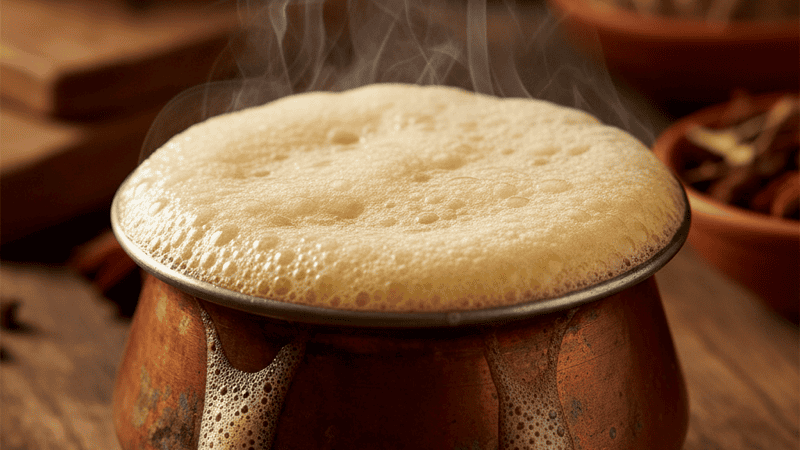
If you have ever watched Indian chai being made — really made, by someone who learned from their grandmother — you probably noticed something during the boil. As the milk heats, a thick skin forms on the surface. Most Western cooks instinctively skim it off. Indian chai makers? They treat it like gold.
That skin is malai — a concentrated layer of milk fat and proteins that forms when whole milk is heated to near-boiling. In chai, malai does not get removed. It gets folded back in during the boil-and-rise cycle. Each rise incorporates more of it into the liquid, gradually building that thick, creamy mouthfeel that separates great chai from adequate chai.
Here is the thing nobody tells you: malai is why your grandmother’s chai was better than yours. She was not using a secret spice blend. She was using full-fat milk and letting the boil do its job.
So when you are evaluating any milk for chai, the first question is simple: does it form malai? That answer shapes everything else.
The Milk-by-Milk Breakdown
Whole Milk (3.25% Fat) — The Default
This is your starting point. Period. Whole milk provides enough fat to carry spice flavors, enough protein to bind tannins, and enough body to feel substantial in the cup. It forms malai reliably. It boils predictably. It does exactly what chai needs milk to do.
If you are not dairy-free and not trying to optimize for a specific outcome, whole milk for chai is the answer. Every time. No exceptions.
One quick note: ultra-pasteurized whole milk works fine, but standard pasteurized forms malai slightly better because its proteins have been less aggressively heat-treated. If you have a choice at the store, go standard.
Verdict: The benchmark. Everything else gets measured against this.
Oat Milk — The Best Dairy-Free Option
Full-fat oat milk (look for “barista edition” or similar branding) is the closest thing to whole milk in chai performance. It has enough fat to carry spice oils, and the beta-glucan fiber in oats gives it a natural creaminess that holds up under sustained boiling better than any other plant milk.
But there are catches you should know about.
Oat milk does not form malai. You lose that skin-folding step entirely, which means you need to compensate with a slightly longer boil to concentrate the liquid. And — this is important — not all oat milks are equal. The cheap, watery ones from the bottom shelf fall apart completely in a boiling pot. Spend the extra dollar on the barista-grade oat milk. The difference is night and day.
What about sweetened vs. unsweetened? Go unsweetened. You want to control the sweetness yourself, especially if your spice blend already has warming sweetness from cinnamon or star anise.
Verdict: Best dairy-free choice for chai. Use barista-grade only. Budget brands will disappoint you.
Coconut Milk — The Flavor Shifter
Coconut milk (canned, full-fat — not the watered-down carton version) produces a rich, thick chai. But it tastes distinctly different. The coconut flavor is assertive and pulls the whole cup in a Southeast Asian direction. Some people love this. Others feel it competes with the cardamom and ginger.
It does not curdle. It handles sustained boiling well. It has plenty of fat — sometimes more than whole dairy milk. But here is the honest truth: coconut milk chai is not a neutral substitute. It is a deliberate flavor choice. Think of it less as “chai with coconut milk” and more as a Thai-influenced variation that stands on its own.
A practical tip: if you find canned coconut milk too thick, mix it 50/50 with water before adding it to your pot. This brings the consistency closer to whole dairy milk while keeping the fat content high enough for good spice extraction.
Verdict: Delicious but opinionated. Not a drop-in replacement for whole milk.
Almond Milk — The Problem Child
Here is where things get rough. Almond milk is thin, low in protein, and prone to curdling under sustained boiling. The tannins in strong black tea lower the pH enough to cause almond proteins to coagulate, producing those unappetizing white curds floating in your cup.
Can you make it work? Technically, yes — by lowering the boil time dramatically, adding the almond milk at the very end (off heat), and using a brand with stabilizers like gellan gum or sunflower lecithin. But you are fighting the milk at every step. The result is a thinner, less flavorful chai that requires more effort for a worse outcome.
That said, almond milk does have one legitimate use case: iced chai. When you are making a cold preparation, there is no boiling to worry about. Pour brewed, concentrated chai over ice, top with almond milk, and the thinness actually works in your favor — it keeps the drink light and refreshing rather than heavy.
Verdict: Avoid for stovetop chai. Acceptable for iced chai and cold preparations only.
Skim and 2% Milk — The False Economy
You are cutting fat to save calories. Understandable impulse. But in chai, fat is not optional — it is functional. Fat-soluble spice compounds need fat to dissolve into the liquid. Less fat means less flavor extraction. Simple as that.
Skim milk produces almost no malai, gives a watery body, and makes tannins more noticeable because there is less protein to bind them. The result? A sharp, thin, slightly bitter cup that needs extra sugar to compensate. You are not saving anything — you are just making worse chai and then adding sugar to fix it.
2% milk is a step up, but still noticeably thinner than whole. If calories are genuinely the concern, here is a better approach: use whole milk and reduce the quantity slightly. A strong brew with less whole milk beats a weak brew with more skim milk every single time.
Verdict: Not recommended. Use whole milk and skip the sugar instead.
The Decision Table
Here is the full comparison at a glance. Save this for your next grocery run.
| Milk | Fat % | Malai? | Curdle Risk | Body | Best For |
|---|---|---|---|---|---|
| Whole | 3.25% | Yes | None | Rich | Everything |
| Oat (barista) | 2-3% | No | Low | Good | Dairy-free daily chai |
| Coconut (canned) | 17-24% | No | None | Very rich | Intentional variation |
| Almond | 1-2% | No | High | Thin | Iced chai only |
| Skim | 0.1% | No | None | Watery | Not recommended |
| 2% | 2% | Minimal | None | Okay | Acceptable compromise |
Troubleshooting: Fixing Common Milk Problems
Already brewed a bad cup? Do not dump it. Here is how to rescue common milk-related issues.
”My Chai Is Thin and Watery”
This is the number one complaint, and the fix depends on what went wrong.
- Wrong milk? If you used skim or low-fat, there is no fixing this cup. Next time, switch to whole milk or barista oat.
- Right milk, still thin? You probably did not boil long enough after adding the milk. The boil-and-rise cycle is where body develops. Let it come to a full, rolling boil at least two or three times.
- Using a concentrate? Concentrates need less milk added back than you think. Start with a 1:1 ratio of concentrate to milk and adjust from there.
”My Plant Milk Curdled”
Curdling happens when proteins meet acid (tannins from tea are mildly acidic). Here is your fix protocol:
- Reduce brew strength. Less tea = fewer tannins = less curdling.
- Add milk to the cup, not the pot. Brew tea and spices in water, strain, then stir in your plant milk off heat.
- Switch brands. Plant milks with stabilizers (carrageenan, gellan gum) resist curdling better.
- Switch milks entirely. If almond keeps curdling, move to oat. It is more stable and tastes better in chai anyway.
”My Chai Tastes Flat Despite Using Whole Milk”
Milk is only half the equation. If your spices are stale, pre-ground, or just plain old, no amount of premium milk will save the cup. Check your spice freshness first. Whole spices should be cracked fresh for each brew. Pre-ground spices lose their volatile oils within weeks of opening.
Also ask yourself: did you add the milk too early? Spices need time to bloom in water before milk goes in. If you add everything at once, the fat in the milk can actually coat spice particles and slow down extraction. Water first, boil with spices, then milk.
Practical Tips That Actually Help
Warm your milk before adding it to the pot. Cold milk dropped into boiling spiced water shocks the temperature and can cause proteins to behave unpredictably — especially in plant milks. Pour the milk into a microwave-safe measuring cup, heat it for 30 seconds, then add it. This also reduces the time needed to bring the pot back to a boil, which matters if you are making chai on a rushed morning schedule.
If using oat milk, extend the final boil by one minute. Since oat milk does not form malai, you need the extra evaporation time to concentrate the liquid and build body. Watch the pot — oat milk foams faster than dairy.
If you must use almond milk, add it off heat. Boil your spices and tea in water only, strain into your cup, then stir in the almond milk at the end. You lose the integrated boil, but you avoid the curdling completely.
Try the condensed milk trick. For an absurdly rich cup, replace half the regular milk with two tablespoons of sweetened condensed milk. This is essentially what Adeni shay (Yemeni chai) does, and the result is thick, caramel-sweet, and intensely satisfying. Not an everyday move, but absolutely worth trying on a weekend when you want something indulgent.
Layer your milks for custom body. Here is a trick almost nobody talks about: mix two milks. Half whole dairy, half barista oat gives you the malai from dairy and the smooth viscosity from oat. Or try whole milk with a splash of canned coconut for richness without overwhelming coconut flavor. There are no rules here — just ratios to experiment with.
If you want to understand why these milks behave so differently at a molecular level, our milk science deep dive breaks down the protein interactions, fat emulsion behavior, and tannin binding that drives everything in this guide.
The Bottom Line on Choosing Milk for Chai
Great chai is not complicated, but it is specific about its milk. Whole milk is the best milk for chai — full stop. If you are dairy-free, invest in good barista-grade oat milk and extend your boil time. Coconut is a worthy side quest for flavor exploration. Everything else is either a deliberate variation or a compromise you should not be making.
Stop blaming your spices. Stop blaming your tea leaves. Stop blaming your brewing technique. Check your milk first. That thin, disappointing cup might be one ingredient swap away from the chai you have been chasing.